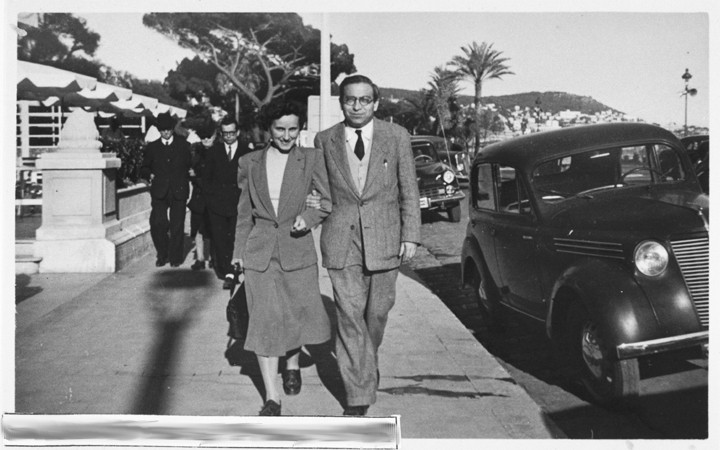
Those people have set an example to be followed:
أعطانا أهل الضبية مثالاً يُقتدى به
http://www.syria-news.com/readnews.php?sy_seq=69714
Alastair Crooke, who spent nearly thirty years in MI6, the British intelligence service, and now works for Conflicts Forum, a think tank in Beirut, told me, “The Lebanese government is opening space for these people to come in. It could be very dangerous.” Crooke said that one Sunni extremist group, Fatah al-Islam, had splintered from its pro-Syrian parent group, Fatah al-Intifada, in the Nahr al-Bared refugee camp, in northern Lebanon. Its membership at the time was less than two hundred. “I was told that within twenty-four hours they were being offered weapons and money by people presenting themselves as representatives of the Lebanese government’s interests—presumably to take on Hezbollah,” Crooke said.
The largest of the groups, Asbat al-Ansar, is situated in the Ain al-Hilweh Palestinian refugee camp. Asbat al-Ansar has received arms and supplies from Lebanese internal-security forces and militias associated with the Siniora government.
In 2005, according to a report by the U.S.-based International Crisis Group, Saad Hariri, the Sunni majority leader of the Lebanese parliament and the son of the slain former Prime Minister—Saad inherited more than four billion dollars after his father’s assassination—paid forty-eight thousand dollars in bail for four members of an Islamic militant group from Dinniyeh. The men had been arrested while trying to establish an Islamic mini-state in northern Lebanon. The Crisis Group noted that many of the militants “had trained in al-Qaeda camps in Afghanistan.”
According to the Crisis Group report, Saad Hariri later used his parliamentary majority to obtain amnesty for twenty-two of the Dinniyeh Islamists, as well as for seven militants suspected of plotting to bomb the Italian and Ukrainian embassies in Beirut, the previous year. (He also arranged a pardon for Samir Geagea, a Maronite Christian militia leader, who had been convicted of four political murders, including the assassination, in 1987, of Prime Minister Rashid Karami.) Hariri described his actions to reporters as humanitarian.
In an interview in Beirut, a senior official in the Siniora government acknowledged that there were Sunni jihadists operating inside Lebanon. “We have a liberal attitude that allows Al Qaeda types to have a presence here,” he said. He related this to concerns that Iran or Syria might decide to turn Lebanon into a “theatre of conflict.”
 Hratch Arbach, jeune artiste syrien d'origine arménienne, mélange peinture, photograhie, installations et jeu d'acteur dans un parcours qui raconte l'Arménie sans discours et sans prétention.
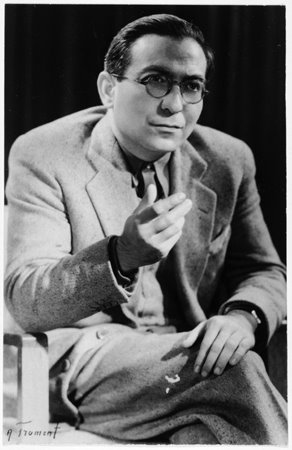 The Unknown Syrian is Moussa Abadi (1910 - 1997), native of the Jewish quarter of Damascus.